
Lovebugs are showing up around Walt Disney World again this September, especially near roads, parking areas, and outdoor transportation. They can look alarming when dozens collect in one place, but the important news for vacationers is reassuring: lovebugs are a short-lived nuisance, not a threat that should change a Disney trip.
When Is Lovebug Season at Disney World?
Florida normally sees two noticeable lovebug flights each year: one in April and May and another in August and September. The adults may appear in large numbers, but the busiest period generally lasts only a few weeks, according to the University of Florida’s guide to living with lovebugs.
Conditions are highly localized. One resort or parking lot can have a visible cluster while another area a few miles away has almost none. That makes a precise property-wide lovebug forecast unrealistic.
Disney Tourist Blog reported encountering more lovebugs around Walt Disney World in September 2026, particularly near the Skyliner, bus stops, parking lots, and the drive toward Disney Springs. Disney has not issued an operational alert, closure, or special policy because of them.
Are Lovebugs Dangerous to Disney World Guests?
No. Lovebugs do not bite, sting, transmit diseases, or carry poison. University of Florida researchers classify them as nuisance insects rather than dangerous or destructive pests.
Their name comes from the way adult males and females remain attached while flying. Their larval stage is actually useful because the insects help break down decaying plant material.
Bug spray is not a useful answer for lovebugs. UF says repellents and public-use insecticides do not provide effective control because more adults quickly move into the area. That advice is specific to lovebugs; it does not replace normal Florida precautions for mosquitoes or ticks.
Where You May Notice Lovebugs Around Walt Disney World
Lovebugs are active during daylight and tend to gather around open, warm, grassy, and roadside environments. At Walt Disney World, that makes parking lots, resort entrances, bus queues, outdoor transportation stations, and roadways more likely trouble spots than indoor attractions.
They are poor fliers, and local wind can move clusters from one area to another. Seeing many insects near one transportation stop does not mean the same conditions exist across all four parks. Our Disney World transportation guide can help if you want to compare driving, buses, boats, the monorail, and the Skyliner for reasons beyond a temporary insect cluster.
What Lovebugs Mean for Disney World Rental Cars and Road Trips
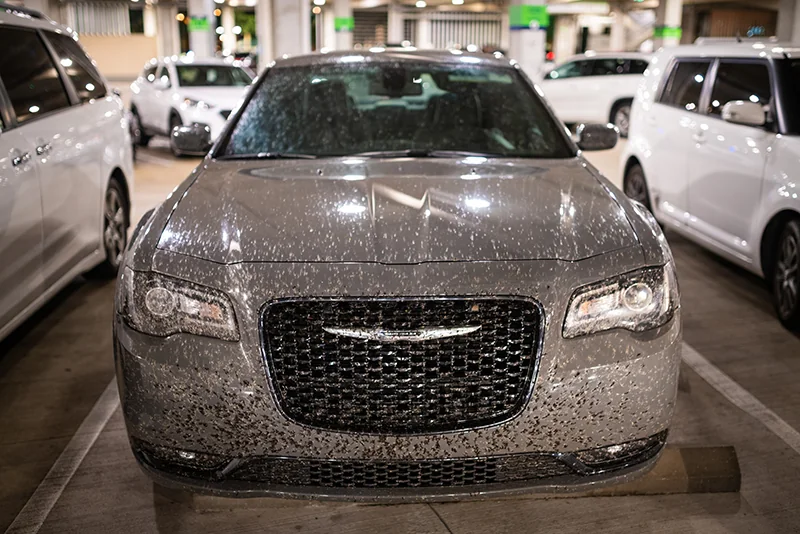
Vehicles are where lovebugs can create a real chore. Their remains collect on the hood, grille, headlights, and windshield during daytime drives. The insects do not instantly dissolve automotive paint, but residue left to bake in the Florida sun can become harder to remove and may damage an unprotected finish.
UF’s Florida lovebug guidance for motorists recommends removing splattered insects within about 24 hours. A recently waxed finish is easier to clean, and soaking the residue with water before washing can help. For a rental car, follow the rental company’s care rules rather than applying wax, oil, or another product without permission.
How to Handle Lovebugs During a Disney World Vacation
- Do not cancel or rearrange a park day. Lovebugs are harmless, seasonal, and unevenly distributed.
- Expect more activity in daylight. The insects are less mobile early and late in the day, although no time is guaranteed to be bug-free.
- Check the front of your vehicle. Clean heavy residue promptly using methods permitted by the vehicle owner or rental company.
- Skip lovebug-specific pesticide use. Sprays do not provide useful control, according to UF.
- Handle indoor strays simply. A vacuum can remove the occasional lovebug that enters a hotel room; report a larger maintenance issue to the resort.
The most realistic plan is to treat lovebugs like a temporary Florida inconvenience. They may make an outdoor wait or drive less pleasant, but they do not affect admission, attractions, dining, or resort eligibility. If you are deciding where to stay for more meaningful reasons, our Disney World resort guide compares transportation, price, and location tradeoffs.
Have lovebugs ever interrupted one of your Florida drives? Share your experience on the Peter the Pirate Facebook page.
About The Author

 Follow Us on BlueSky
 Follow Us on Mastodon